
Azenco Pergolas for Austin Commercial Patios
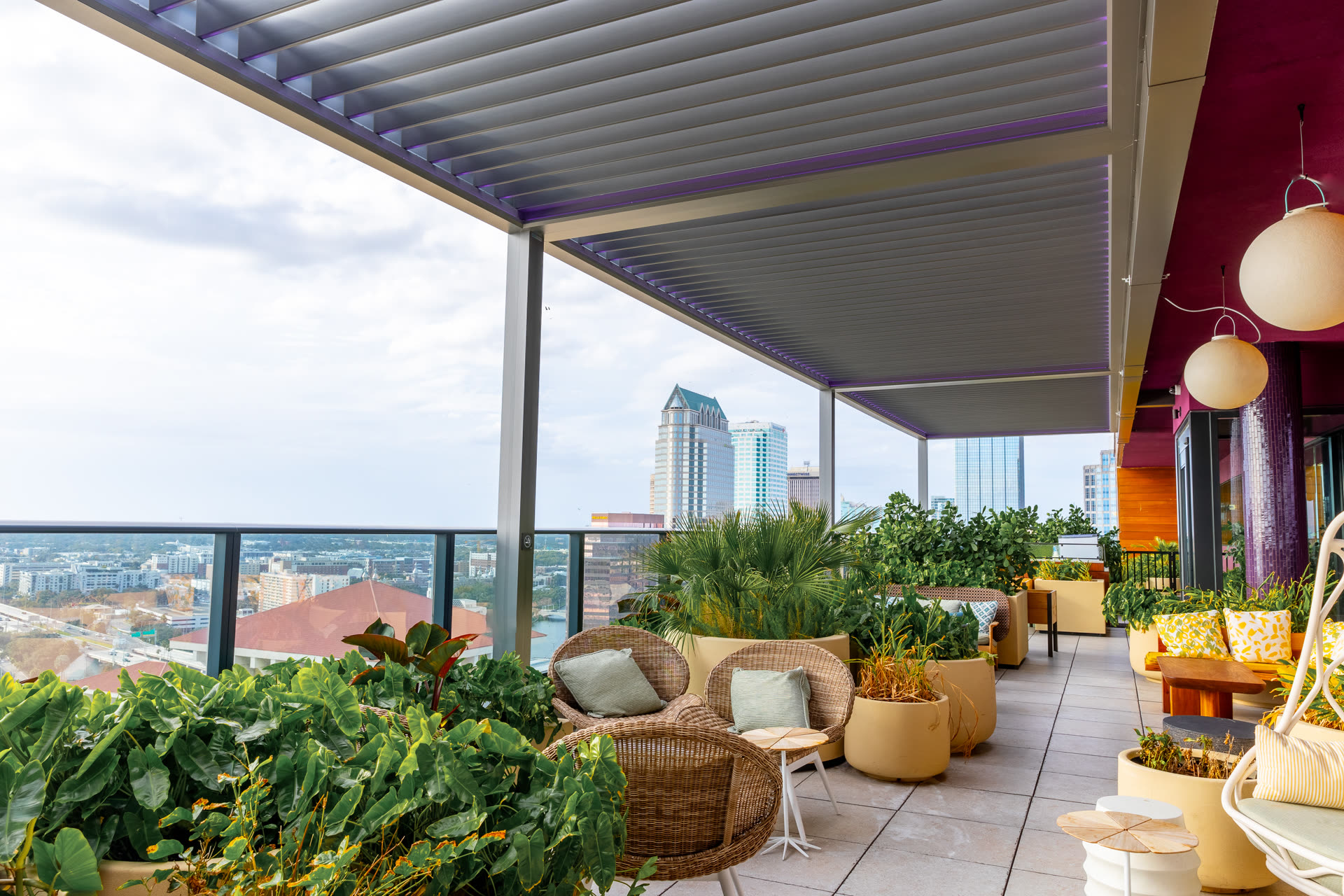
Outdoor seating in Austin is a revenue lever, not an amenity. Every restaurant operator on South Congress, every hotel GM on Rainey, and every mixed-use asset manager along the Domain has done the same math: covered patio seats book, uncovered ones don't. The question is which shade structure survives Central Texas sun, sudden hail, and the city's outdoor-seating permit process without becoming an expense line the operator wants to rip out in three years.
Azenco's aluminum motorized and fixed louvered pergolas — represented in Texas through Construction Component Sales Inc. — are increasingly the answer developers spec in for commercial patios. Here is why the product line fits Austin specifically, and where CCSI slots into the project.
Why louvered aluminum, not timber or shade sail
Timber pergolas look great on renderings and last five to eight years in Central Texas before the sun and wet-dry cycling cook them. Shade sails handle sun but not rain, not wind gusts, and not the visual expectation of a hotel or Class-A retail tenant. Motorized louvered aluminum is the category that solves all three failure modes at once:
- Rotating louvers close for rain and open for airflow. The R-BLADE louvers rotate 0° to 90°, so operators can seal the roof against a pop-up storm and reopen it as soon as the cell passes.
- Built-in gutter system. Water routes through concealed channels to downspouts inside the posts. No visible plumbing, no rusted collectors, no drip line down the middle of a dining table.
- Powder-coated extruded aluminum. No annual staining, no replacing sun-baked shade fabric, no wood rot.
Azenco publishes a wind rating up to 190 mph and a snow load up to 100 lbs per square foot on the R-BLADE product page, with Miami-Dade NOA certification for High-Velocity Hurricane Zones (Azenco Outdoor). Central Texas doesn't need HVHZ engineering, but the certification gives structural reviewers something concrete to attach to, and it changes the conversation on hail-belt insurance renewals.
The Austin heat math
Austin's outdoor-use season used to be spring and fall. It isn't anymore. City of Austin climate projections show rising summer heat and more days above the historical extremes, and the University of Texas urban heat island research shows the downtown and eastside grid running measurably hotter than the surrounding region (UT Austin Repositories). For an operator, that translates to more months when an uncovered western-facing patio is unusable between 2 p.m. and 7 p.m. — the exact window when hospitality revenue lives.
Central Texas landscape designers put the covered-vs-open patio delta at roughly 10 to 15 degrees of perceived temperature when the shade structure blocks direct sun and lets the prevailing south-southeast breeze pass through (Anderson Landscapes). A louvered pergola oriented to the western sun, with louvers tilted to block afternoon glare while venting hot air upward, is engineered exactly for that use case.
The Austin permit path
Two permits usually run in parallel on a commercial patio project:
- Seating permit. The City of Austin runs three programs: Temporary Sidewalk Cafe (public right of way), Street Patio / parklet (former on-street parking), and Parking Lot Patio (private lots). Each has its own application, review timeline, and renewal cadence (City of Austin).
- Building permit for the pergola itself. A fixed structure with electrical service for the motor and lighting is a building permit under the adopted IBC. Wind design and anchorage details are the two items reviewers focus on.
Sequence matters. Design the seating layout first, then confirm the pergola footprint fits inside whatever the seating permit approves. Multiple operators have paid for redesigns because the pergola posts sat six inches into a required accessible path.
Where the commercial-account emphasis pays off
CCSI represents Azenco to commercial buyers specifically, which changes what a project team gets on top of the product:
- Multi-unit standardization. Restaurant groups, hotel portfolios, and multifamily developers can spec one louvered-pergola standard across sites and have CCSI hold the same pricing and lead time on each rollout.
- Structural coordination. Azenco's engineering package plugs into the project's structural drawings, which shortens the reviewer's back-and-forth and keeps the amenity out of the critical-path column on the schedule.
- Warranty position. A 15-year structural warranty on aluminum extrusion is a category defensible against wood pergolas, tension shades, or one-off welded steel canopies that don't come with a manufacturer behind them.
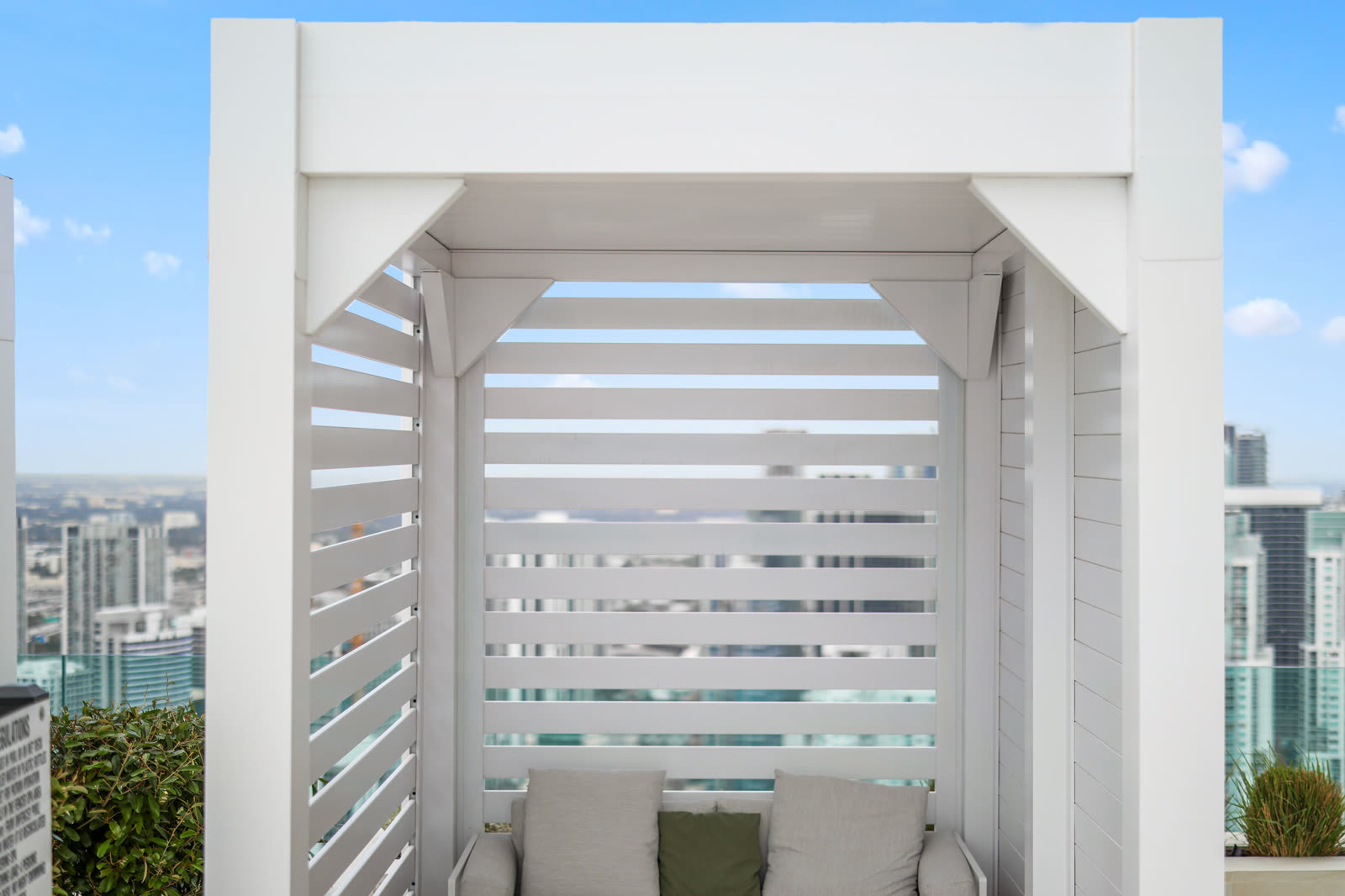
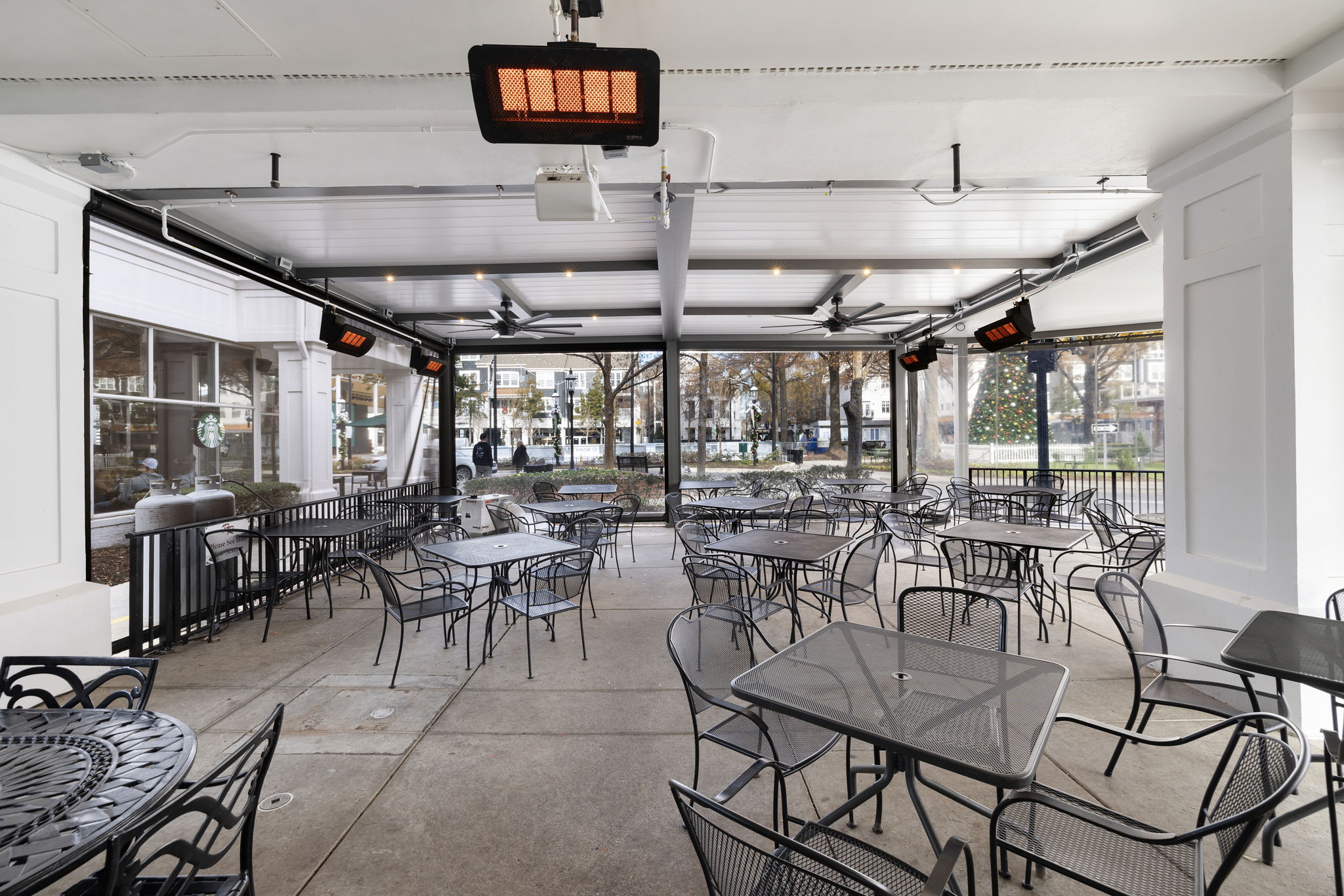
Typical projects: boutique hotel pool decks, food-hall entry courts, restaurant back patios that need to seat 40 covers year-round, office-park amenity decks, HOA clubhouse pool cabanas, and Class-A retail leasing spaces where the outdoor seating is the differentiator against the next center over.
Frequently asked questions
Are Azenco pergolas rated for Central Texas wind loads?
Yes. The R-BLADE carries a published wind rating up to 190 mph and is Miami-Dade NOA approved. Central Texas design wind speeds are well below that ceiling, which gives reviewers a clear structural pedigree to reference.
Do Austin restaurants need a permit for a pergola over an outdoor patio?
Almost always two: a seating permit for the outdoor use, and a building permit for the pergola itself. Plan them in parallel.
What is the ROI case for a motorized louvered pergola over a hospitality patio?
Covered seats stay bookable through afternoon sun and pop-up rain, and shaded hardscape drops perceived temperature by roughly 10 to 15 degrees in Central Texas. The revenue delta is measured in covers per shift, not in aesthetics.
Can CCSI help spec a pergola for a multi-tenant development or HOA amenity?
Yes. Send project drawings and constraints through the CCSI contact form and CCSI will route a scoped proposal for Azenco on the project.
Looking for a product or a quote?
Tell us about your project and we'll help you source the right building product.