
Shaded Courtyards for Senior Living in Austin: Planning Azenco R-BLADE Pergolas for Residents, Families, and Staff
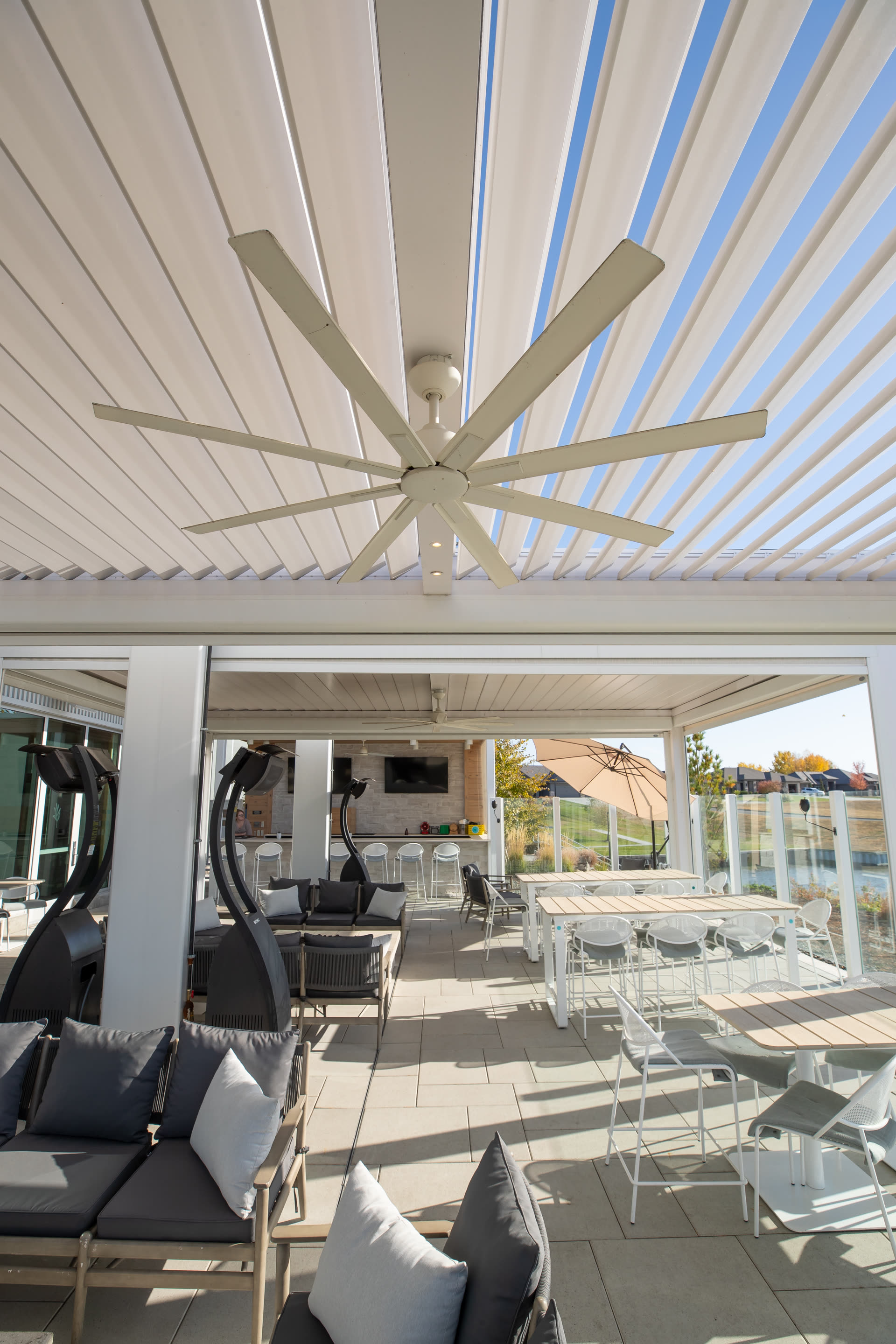
For senior living, assisted living, and memory care communities, the courtyard is part of daily life. Residents use it for morning coffee, visits with family, activities, and a change of scenery. In Central Texas, though, an uncovered courtyard can sit empty for much of the year because it is simply too hot or too bright.
This post covers how Austin-area operators, owners, and design teams can plan shaded outdoor space with the Azenco Outdoor R-BLADE louvered pergola, with a focus on comfort, control, and staff needs.
Why shade matters more for older residents
According to the CDC's guidance on heat and older adults, people 65 and older are more prone to heat-related health problems. The CDC notes that older adults do not adjust as well to sudden temperature changes, are more likely to have chronic conditions that change the body's response to heat, and are more likely to take medicines that affect temperature control or sweating.
A pergola is not a cooling system, and it does not replace air-conditioned indoor space on dangerous heat days. What it can do is make outdoor space usable more often by blocking direct sun, and give staff a shaded place to bring residents outside during the cooler parts of the day.
What R-BLADE brings to a courtyard
Adjustable louvers
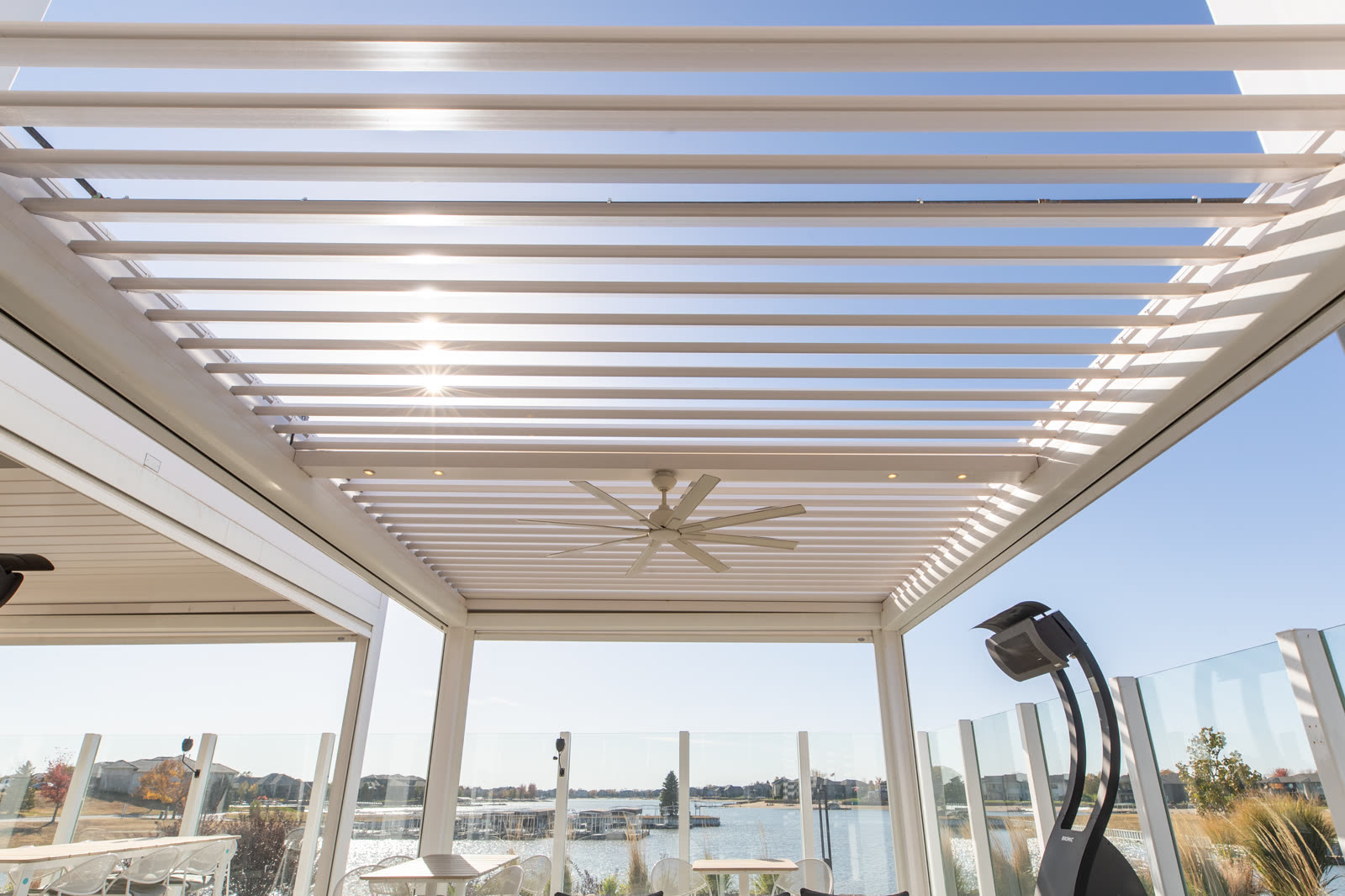
R-BLADE uses motorized, dual-wall aluminum louvers that rotate up to 90 degrees. Closed, they form a gapless roof that drains water into built-in gutters. Open, they let in light and air. That flexibility matters in a community setting:
- Close the louvers for midday shade or light rain.
- Angle them to block low sun while keeping airflow.
- Open them on mild days for daylight.
Built for Texas weather
Azenco lists R-BLADE wind resistance up to 190 mph, snow load up to 100 lb per square foot, and Miami-Dade NOA approval. The frame is powder-coated extruded aluminum.
Accessories that help residents and staff
Azenco's accessories page lists LED lighting, fans, infrared heaters, screens, remote and wall-switch control, the BOND app, and sun, wind, and rain sensors. For senior living, a few stand out:
- Fans. Air movement makes shade more comfortable in humid weather. The CDC cautions against relying on fans as the main cooling source in extreme heat, so treat them as a comfort feature, not a safety plan.
- Screens. Side screens block low morning or afternoon sun and can reduce glare for residents with vision sensitivity.
- Lighting. Even, glare-free lighting supports evening use and safer walking.
- Heaters. Infrared heaters can extend use into cool mornings and winter afternoons.
- Simple controls. A wall switch is easy for any staff member to use. Sensors can respond to weather without someone needing to remember.
Design considerations for senior living
Placement and access
Put shaded areas where residents already go: next to dining rooms, activity rooms, and main entrances. Short, level paths from indoors make it more likely the space will be used. Work with your architect on accessible routes, surfaces, and clearances, and keep posts out of walking paths.
Sight lines for staff
In assisted living and memory care, staff need to see residents outside. Plan post locations and screens so they do not block views from nursing stations, activity rooms, or doors. Screens can be lowered on the sun side and left open on the side facing the building.
Seating mix
Plan for a mix of uses under the cover:
- Small tables for family visits.
- Lounge seating with arms for easier standing.
- Open space for wheelchairs and walkers.
- An activity area for group programs.
Drainage
Built-in gutters route rain off the roof, but downspouts must discharge away from walking paths. Standing water and wet surfaces near walkways are a slip risk.
Daily operations
A courtyard cover should make staff work easier, not add tasks. Ask during planning:
- Who opens and closes the louvers each day?
- Which settings work for morning, midday, and evening?
- Who checks fans, lighting, and screens?
- What is the plan on high-heat days, when residents should stay indoors?
Write the answers into a one-page operating guide for staff.
Permits and review
A permanent pergola at a commercial senior living property will usually need plan review. Start with the City of Austin commercial plan review page, and check with your licensing and life-safety advisors about any requirements that apply to your facility type.
Planning checklist
- Map where residents already gather outdoors.
- Pick locations near dining and activity rooms.
- Plan accessible routes and post placement.
- Choose fans, screens, lighting, and heaters.
- Keep staff sight lines open.
- Route downspouts away from walkways.
- Write a simple staff operating guide.
CCSI supplies Azenco pergolas and accessories for Austin commercial projects, including senior living communities. See the CCSI pergola line or start on the CCSI homepage.
Frequently asked questions
Can a pergola keep senior living residents safe from extreme heat?
No. A pergola provides shade, not cooling. The CDC advises older adults to stay in air-conditioned buildings during extreme heat. Shade makes outdoor space usable more often in milder conditions.
Which Azenco accessories are useful for senior living courtyards?
Azenco lists fans, LED lighting, infrared heaters, screens, remote and wall-switch control, the BOND app, and sun, wind, and rain sensors. Fans, screens, lighting, and simple controls are common priorities.
How do R-BLADE louvers handle rain?
When closed, R-BLADE louvers form a gapless roof and drain water into built-in gutters. Downspouts should be routed away from walking paths.
Does a senior living pergola need a permit in Austin?
A permanent structure at a commercial property usually goes through City of Austin plan review. Also check any requirements tied to your facility type with your licensing and life-safety advisors.
Looking for a product or a quote?
Tell us about your project and we'll help you source the right building product.