
Shared Seating Under Cover: Azenco R-BLADE Pergolas for Town Centers and Retail Centers Around Austin
Town centers and open-air retail centers around Austin, from Round Rock and Cedar Park to Bee Cave, Lakeway, Georgetown, and Pflugerville, depend on people staying longer. A shared seating patio gives shoppers and diners somewhere to sit between stops, eat takeout from a nearby tenant, or meet friends. In Central Texas, that only works if the seating is shaded.
This post covers how landlords, property managers, and design teams plan covered shared seating with the Azenco Outdoor R-BLADE louvered pergola.
Why shared seating needs real cover
Umbrellas and shade sails help, but shared seating in a retail center has different needs than a single restaurant patio:
- It is used all day, by many tenants' customers.
- It has to look good to shoppers walking past.
- Umbrellas need daily handling and storage, often by staff who work for no single tenant.
- It has to hold up to storms without being taken down.
Sun exposure is a real concern too. The EPA UV Index scale advises seeking shade during midday hours when UV levels are high, which in Texas covers much of the year.
What R-BLADE adds
A roof that adjusts
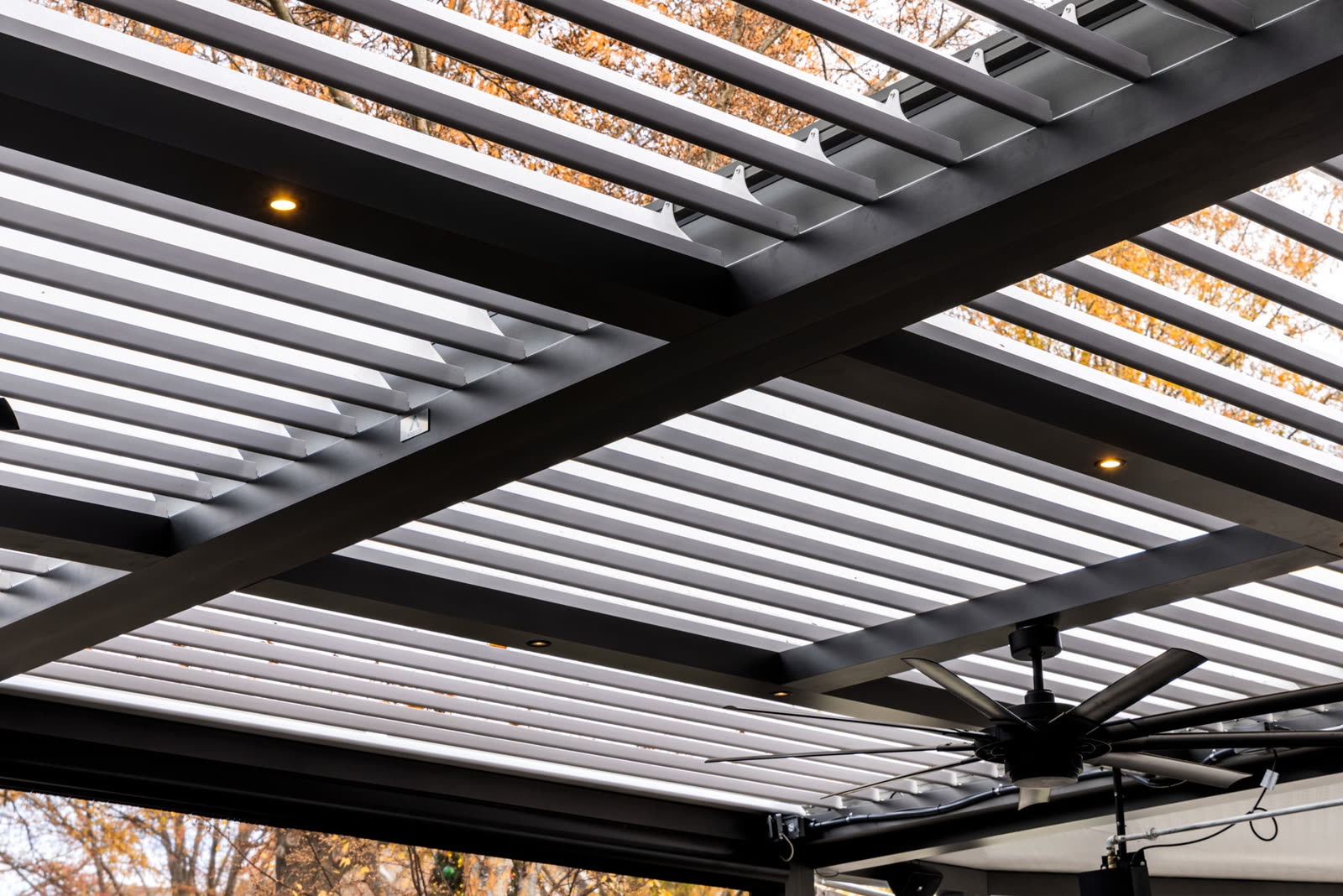
R-BLADE uses motorized, dual-wall aluminum louvers that rotate up to 90 degrees. Closed, they form a gapless roof that drains water into built-in gutters. Open, they let in light and air. Property managers can set the roof for midday shade, light rain, or open sky on mild days.
Built for a permanent public space
Azenco lists R-BLADE wind resistance up to 190 mph, snow load up to 100 lb per square foot, and Miami-Dade NOA approval. The frame is powder-coated extruded aluminum. For a shared space that stays up year-round, that is a different class of structure than umbrellas.
Accessories for a shared patio
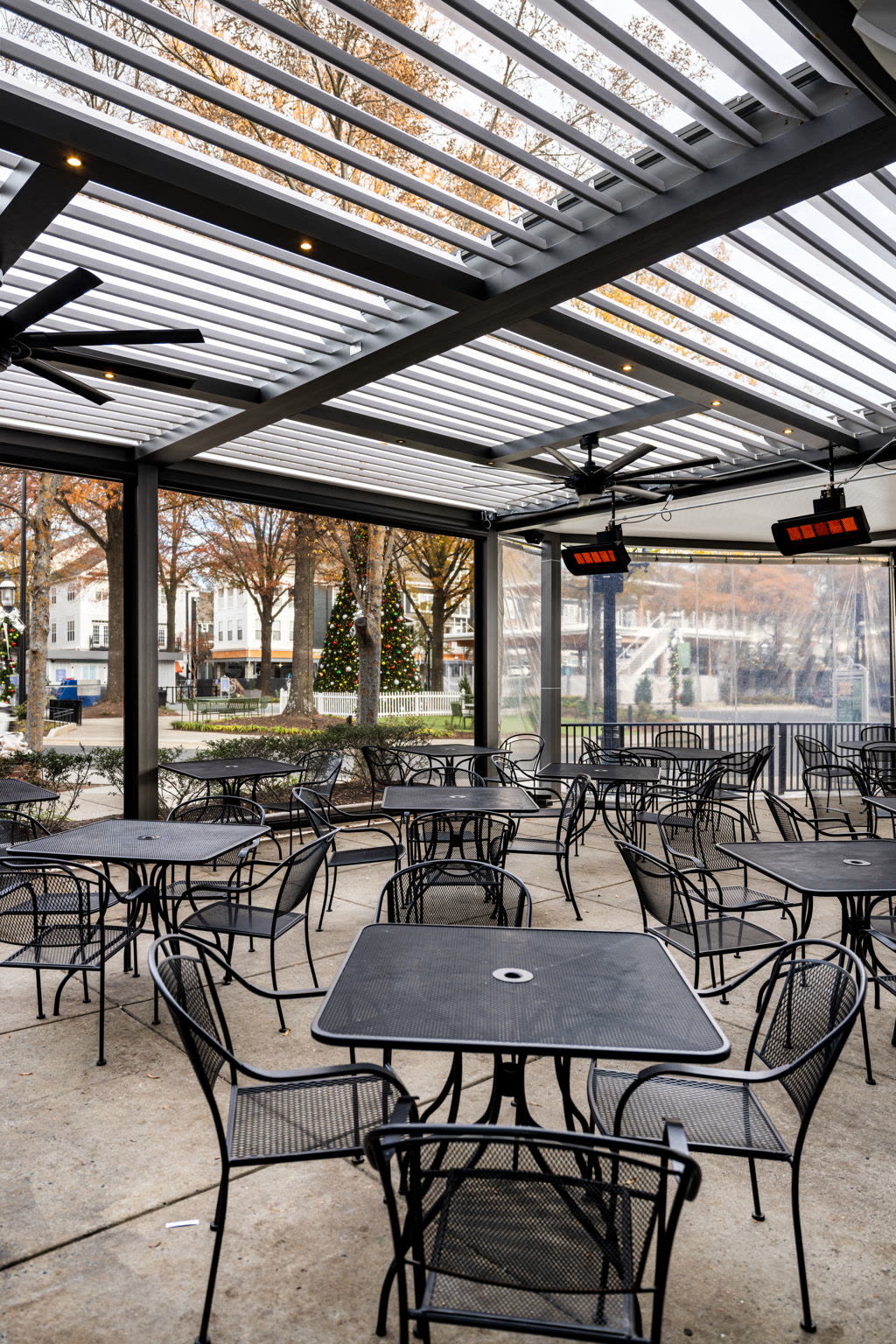
Azenco's accessories page lists LED lighting, fans, infrared heaters, screens, remote and wall-switch control, the BOND app, and sun, wind, and rain sensors. On a shared seating patio:
- Fans keep air moving on humid afternoons.
- Infrared heaters keep the patio useful on cool evenings and during holiday shopping season.
- Side screens cut wind and low sun on exposed edges.
- Lighting supports evening events and makes the space feel safe after dark.
- Sensors and simple controls reduce the need for staff to manage the roof by hand.
Planning the space
Location
Shared seating works best where people already walk: near food tenants, at the center of a retail block, or facing a green or play area. Avoid spots that block storefronts or signage, since tenants will notice.
Layout
Plan a mix of table sizes for small groups and families, and keep clear paths through the seating. Post locations should fall between tables and along edges, not in walking routes or in front of tenant entrances.
Events
Many town centers use their patios for live music, seasonal markets, and holiday events. If that is the plan, leave open floor area, plan power for performers and vendors, and plan lighting for evening use.
Drainage
Built-in gutters collect rain off the roof, but downspouts must discharge to drains or landscaping, away from walkways and storefronts.
Who operates it
A shared patio needs a clear owner. Decide early:
- Who opens and closes the louvers and screens.
- Who controls fans, heaters, and lights, and on what schedule.
- Who handles cleaning and inspections.
- How costs are shared through common area maintenance charges, if applicable.
Sensors and a wall switch in a property management office can keep daily operation simple.
Permits and review
Each city around Austin has its own permitting process. Inside Austin city limits, start with the City of Austin commercial plan review page. In Round Rock, Cedar Park, Bee Cave, Lakeway, Georgetown, and other cities, contact the local building department early. Your design team should also check the center's own design standards and any tenant lease provisions about common areas.
Planning checklist
- Pick a location near food tenants and foot traffic.
- Keep storefronts and signage visible.
- Plan seating, paths, and post locations.
- Choose fans, heaters, screens, lighting, and controls.
- Plan power and open space for events.
- Route downspouts away from walkways.
- Assign operations and cost sharing.
- Confirm permits with the local city.
CCSI supplies Azenco pergolas and accessories for commercial projects across the Austin area. See the CCSI pergola line or start on the CCSI homepage.
Frequently asked questions
Why use a louvered pergola instead of umbrellas for shared seating?
Umbrellas need daily handling and storage, and usually come down in storms. An Azenco R-BLADE is a permanent structure with adjustable louvers, built-in gutters, and listed wind resistance up to 190 mph.
Which Azenco accessories suit a retail center patio?
Azenco lists fans, infrared heaters, screens, LED lighting, remote and wall-switch control, the BOND app, and sun, wind, and rain sensors. Shared patios often use fans, heaters, screens, and lighting.
Do town center pergolas need a permit?
Usually. Inside Austin, start with the City of Austin commercial plan review process. Other cities around Austin have their own building departments, so contact them early.
Can a covered patio host events?
Yes, if it is planned for them. Leave open floor area, plan power for performers and vendors, and plan lighting for evening use.
Looking for a product or a quote?
Tell us about your project and we'll help you source the right building product.