
Where the Water Goes: Gutter Overflow, Entries, and the Building Envelope on Texas Commercial Properties
A gutter is only useful if water reaches the downspout. When leaves, seed pods, and roof grit build up, the gutter fills and water goes over the front edge. On a commercial building, that overflow tends to land in the worst places: building entries, sidewalks, wall assemblies, and the soil along the foundation.
This post looks at where overflow causes problems on Texas commercial properties, what published guidance says about roof drainage, and where Sasquatch gutter protection fits.
What the design guidance expects
Building design guidance treats gutters as part of the building's water control, not as trim. The Whole Building Design Guide's facility standard for gutters and downspouts recommends gutters on all eaves that receive water and requires them on eaves above the first story unless the drained area is minimal. It calls for sizing roof drainage for 10-year storms using SMACNA methods, placing downspouts away from building entries, and keeping discharged water from running across sidewalks (Whole Building Design Guide).
Those rules assume the gutter is clear. A clogged gutter undoes them. Water that should travel to a downspout placed away from the door spills over at whatever point the gutter is fullest, which may be right above an entry.
Four places overflow does damage
1. Entries and walkways
Overflow above a doorway sends water onto the landing and walkway. On retail, office, and multifamily properties, that is a slip concern and a customer complaint, and it often shows up first as a maintenance ticket.
2. Fascia and wall assemblies
When water backs up behind a full gutter, it can run along the fascia and down the wall. Repeated wetting at the same spot is where stained finishes, failed sealant, and wet framing tend to start.
3. Foundations and landscaping
Overflow drops water along the base of the wall instead of carrying it to a downspout and away. The EPA lists gutters and downspouts that direct water into or under a building among common moisture sources (U.S. EPA).
4. Interior moisture
Water that gets into the wall or under the slab does not stay outside. The EPA notes that wet building materials need to dry within 24 to 48 hours to help avoid mold growth. Avoiding repeated wetting is easier than drying the building out afterward.
Why Texas properties see this often
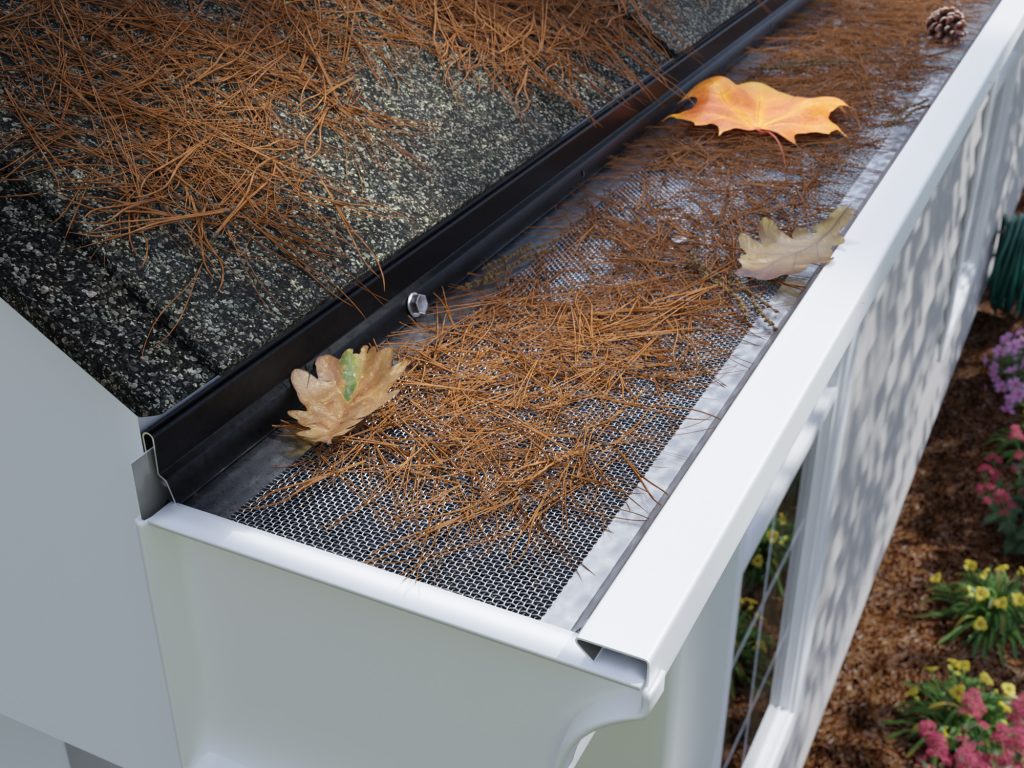
Texas commercial properties often have mature live oaks, pecans, and pines close to the building, along with heavy downpours that test a gutter all at once. A gutter that copes with light rain while half full of debris can overflow in the first heavy storm. Debris load also varies by elevation: the side under the trees clogs first, which is why overflow complaints tend to cluster at the same entries year after year.
Where Sasquatch fits
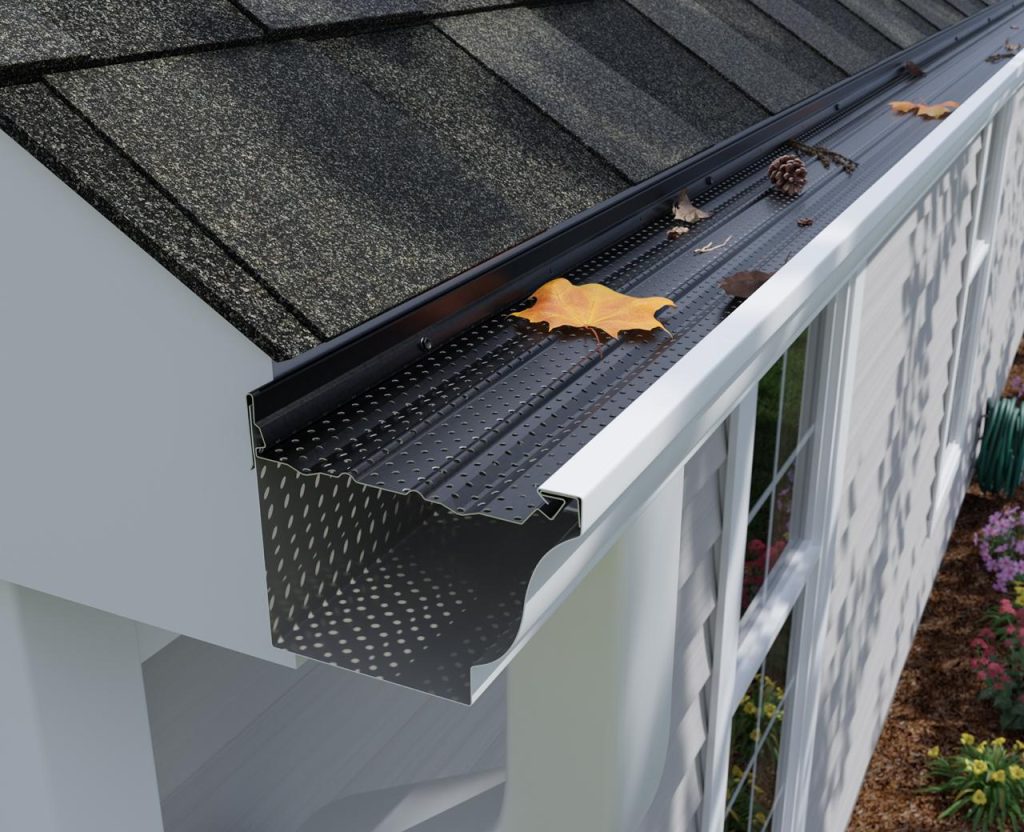
Sasquatch is E-Z Gutter Guard's hangerless gutter protection system. It is a cover for the gutter, not a gutter. It locks into the gutter's front hem and fastens through a patent-pending rear screw ledge directly to the fascia (E-Z Gutter Guard).
Its job in this situation is simple: keep debris out of the gutter, so water reaches the downspouts the designer placed away from entries. Product details for Texas commercial jobs:
- 5-inch and 6-inch widths to match the gutter, in 7.5-foot lengths, black finish.
- .019-inch high-strength aluminum standard, or .022-inch Arctic Extreme heavy-duty.
- Meets ASTM E2768 for flame spread and ASTM E2886 for ember intrusion.
- Lifetime limited transferable warranty.
A cover does not fix an undersized gutter, a missing downspout, or a downspout that discharges at the door. Those are drainage design issues. Sasquatch addresses the debris problem that makes a correctly designed system overflow.
A practical walk-through for property teams
- Map complaints. List where overflow, wet entries, or wall staining show up, by building and elevation.
- Check the trees. Note which elevations sit under heavy canopy.
- Confirm the downspouts. Make sure each run has working downspouts that discharge away from entries and walks.
- Measure the gutters. Record width so the cover order matches.
- Prioritize. Start with elevations over entries and under trees, then cover the rest of the portfolio.
Where CCSI fits
Construction Component Sales Inc. represents Sasquatch to commercial property managers, roofing contractors, GCs, and HOAs across Texas. We help prioritize problem elevations and size orders to the gutters on site. See the full CCSI E-Z Gutter Guard product line.
Frequently asked questions
Does gutter protection stop all gutter overflow?
No. Gutter protection keeps debris out so the gutter can carry the water it was designed for. Undersized gutters or missing downspouts are drainage design issues that a cover does not fix.
Where should downspouts discharge on a commercial building?
Whole Building Design Guide facility guidance calls for placing downspouts away from building entries and keeping discharged water from running across sidewalks.
What is Sasquatch?
Sasquatch is E-Z Gutter Guard's hangerless gutter protection cover. It locks into the gutter's front hem and fastens to the fascia through a rear screw ledge. It is not a gutter.
Which elevations should be covered first?
Start with gutters over entries and walkways and those under heavy tree canopy, since those are where overflow tends to cause the most visible problems.
Looking for a product or a quote?
Tell us about your project and we'll help you source the right building product.