
North Texas and Panhandle Winter Performance: Sasquatch Under Ice Loading and Freeze-Thaw Cycles
Texas winter weather stops at the Red River in the popular imagination, but commercial property owners in Amarillo, Lubbock, Wichita Falls, Fort Worth, and Dallas know differently. North Texas and Panhandle winters produce ice loading events, freeze-thaw cycles, and occasional prolonged sub-freezing periods that stress commercial roof edges. Gutter protection specification decisions made without accounting for those loads produce spring callbacks.
The three winter loading conditions to design against
Commercial gutter protection in North Texas and the Panhandle faces three distinct winter loading conditions (National Weather Service Lubbock):
- Static ice loading. A sustained sub-freezing period produces an ice layer on the roof and gutter edge. The load sits on the gutter protection surface until the thaw. Traditional guard hangers can deform under sustained load.
- Freeze-thaw cycling. Daytime thaw refreezes overnight into gutter and along guard surfaces. The expansion cycle stresses guard-to-hanger connections and any fastener that passes through the guard material.
- Sliding roof ice or snow discharge. Metal or standing-seam roofs can shed ice sheets onto the gutter edge in a single event. The gutter protection has to survive the impact without releasing from its attachment.
Why the hangerless design survives these conditions
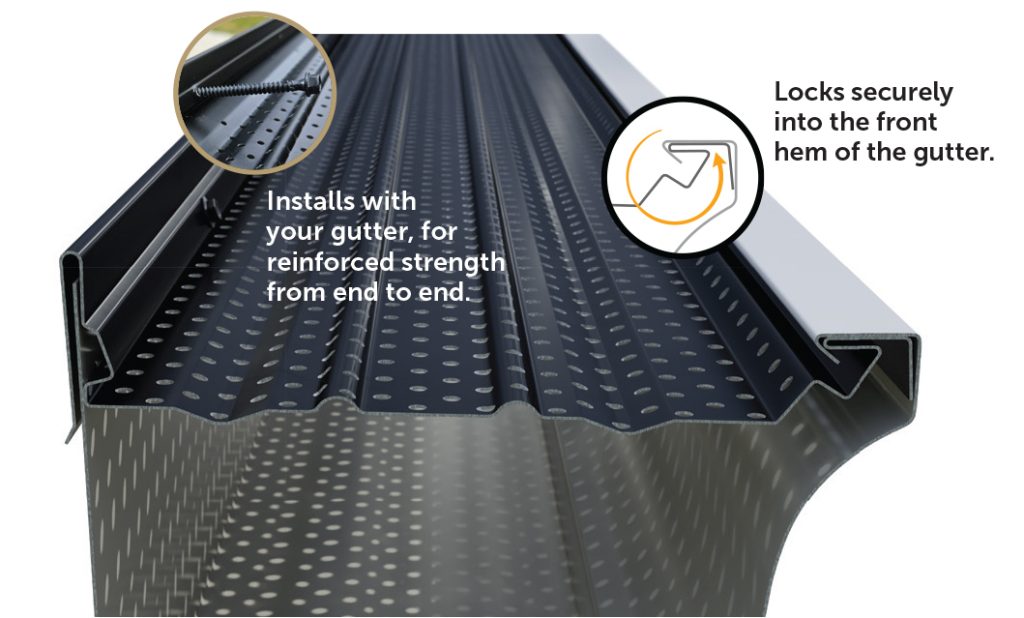
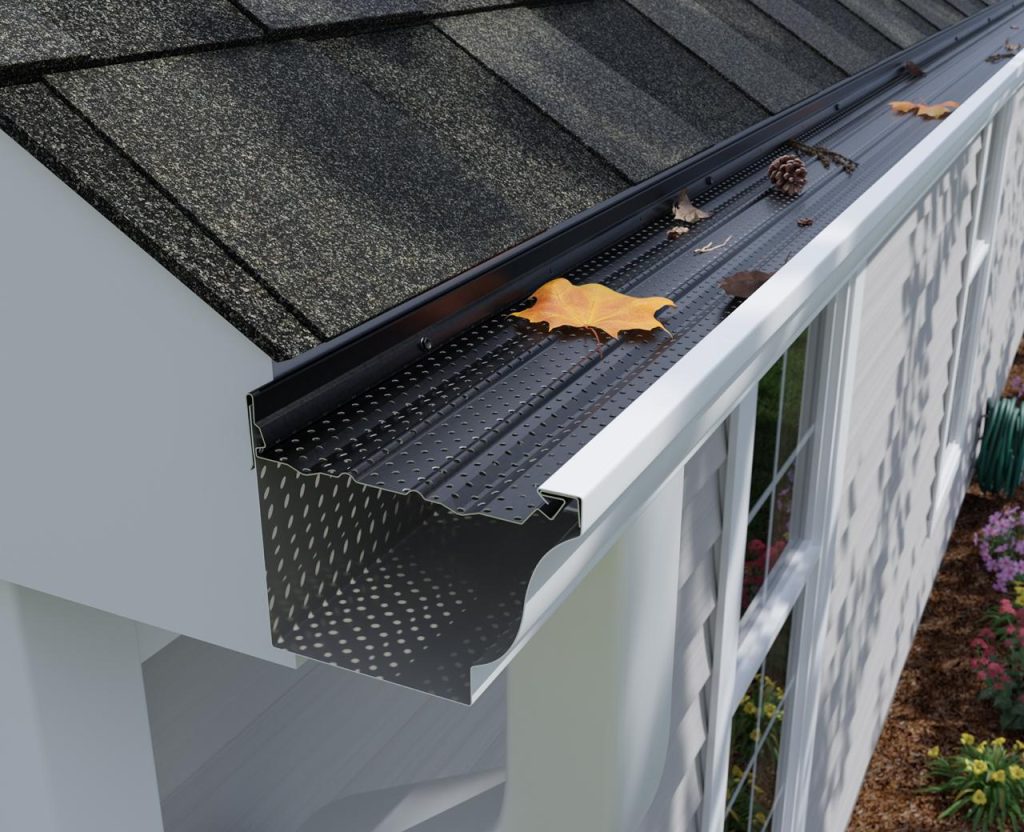
Sasquatch is engineered without hanger-to-guard connections (E-Z Gutter Guard). Under winter loading, that design eliminates the failure modes traditional guards exhibit:
- Front-hem lock intact under static load. The lock geometry holds under sustained ice weight; there is no hanger connection to deform.
- Fascia screw ledge holds through freeze-thaw. The rear attachment fixes to structural fascia, which cycles thermally with the rest of the building rather than working against a separate guard fastening pattern.
- Aluminum surface tolerates sliding discharge. The .019″ standard aluminum tolerates most sliding discharge events without failure. The .022″ Arctic Extreme heavy-duty specification is available for locations with steep metal roofs where sliding load is a primary design concern.
Where to spec Arctic Extreme in North Texas
Commercial properties in the Panhandle, along the Red River corridor, and in the Wichita Falls to Sherman belt see the highest sustained ice loading in Texas. The .022″ Arctic Extreme specification is the defensible default in these locations. The DFW metroplex sees intermittent ice loading; the .019″ standard specification is typically sufficient. San Antonio and southward see rare ice events; the standard specification is sufficient without upgrade (National Weather Service Fort Worth).
Spring inspection after a hard winter
A hard North Texas winter warrants a spring gutter and gutter-protection inspection cycle across the commercial portfolio. The four-item post-event inspection template applies: attachment integrity, surface condition, flow test, warranty-file entry. On Sasquatch, the spring inspection typically closes out as a documentation-only exercise with no repair line items. On traditional guards, the same inspection produces a callback list.
Coordination with the roofing GC's cold-weather work sequence
Commercial re-roof and new-construction work in North Texas often schedules around cold-weather membrane installation temperatures. Sasquatch installation is not temperature-sensitive in the same way membrane work is — the specification is aluminum and mechanical fasteners, not a temperature-cured adhesive. That means the gutter and gutter protection scope can run through cold-weather windows when membrane crews are stood down, keeping the overall project schedule intact.
Snow accumulation and rare Panhandle events
The Panhandle sees rare but meaningful snow accumulation events, particularly around Amarillo and Dumas. Commercial gutter protection has to hold vertical load without deforming into the gutter body. The Sasquatch profile transfers vertical load through the front-hem lock to the gutter itself and through the rear ledge to structural fascia, both of which handle the accumulated weight without introducing a hanger-connection failure point. Cleanup after a rare heavy-snow event is a walk-and-inspect exercise, not a repair cycle.
The insurance underwriter's winter concern
Commercial property insurance underwriters in North Texas pay attention to the winter loss history on a property. A gutter protection specification that eliminates hanger-connection failure modes reads well in the winter-loss discussion. The transferable lifetime warranty documentation on the Sasquatch installation supports the underwriter's file and the annual renewal conversation (Insurance Information Institute).
Where CCSI fits
Construction Component Sales Inc. represents Sasquatch into North Texas commercial projects. That includes the .019″ versus .022″ specification decision by location, coordination with the roofing GC's cold-weather work sequence, and warranty documentation for the property insurance underwriter conversation. See the full CCSI E-Z Gutter Guard product line.
Frequently asked questions
Does the .022-inch Arctic Extreme specification cost meaningfully more than the standard .019?
The material line is somewhat higher on the Arctic Extreme specification. The installed cost delta is modest against the incremental winter-load performance. For Panhandle and Red River corridor properties, the delta is typically justified against the callback avoidance.
Do freeze-thaw cycles void the Sasquatch warranty?
No. The lifetime limited transferable warranty covers manufacturing defects and normal environmental exposure. Freeze-thaw is normal environmental exposure in Texas winters and is covered under warranty terms.
How does Sasquatch behave under sliding ice discharge from a metal roof above?
Standard .019-inch aluminum tolerates most sliding discharge events without failure. For steep metal roofs where sliding load is the primary design concern, the .022-inch Arctic Extreme specification is the defensible upgrade path.
Can Sasquatch be installed in cold weather without waiting for spring?
Yes. The system is aluminum and mechanical fasteners, not adhesive-cured. Installation can proceed through cold-weather windows when membrane crews are stood down, keeping the overall project schedule intact.
Looking for a product or a quote?
Tell us about your project and we'll help you source the right building product.