
Gutters on School and Church Campuses: Moisture Control, Inspections, and Sasquatch Gutter Protection in Texas

School districts, private schools, and churches across Texas manage many buildings on tight budgets, often under large, mature trees. Gutters on those buildings get little attention until water shows up where it should not: a stained ceiling tile, a damp classroom corner, or a puddle at an entrance.
This post covers why gutters matter for moisture control on campuses, what EPA guidance says, and where Sasquatch gutter protection fits.
What EPA guidance says about gutters
The EPA's model school environmental health program treats moisture control as central to mold control, and lists gutter and drainage maintenance among its actions:
- Gutters, downspouts, scuppers, and storm drains should be free of excessive debris.
- Gutters and roofs should have no standing water.
- Downspouts should drain to the storm sewer or to a grade sloped away from the building.
- Downspouts, scuppers, and storm drains should show no evidence of overflow or obstruction.
- Roofs should be inspected at least twice a year, including a pre-winter inspection in October or November.
The EPA's Mold Remediation in Schools and Commercial Buildings guide lists landscaping or gutters that direct water into or under a building, along with delayed or insufficient maintenance, among the moisture problems seen in schools and large buildings.
That guidance applies just as well to church buildings, fellowship halls, and childcare wings.
Why campus gutters clog
- Mature trees. Live oaks, pecans, and pines around older campuses drop leaves, needles, and pollen through much of the year.
- Many buildings. Portables, gyms, and additions multiply the gutter footage a small maintenance team has to cover.
- Limited access. Cleaning means ladders or lifts, and work has to be scheduled around students and services.
- Long gaps between cleanings. When budgets are tight, gutter cleaning is easy to defer.
When gutters clog, water overflows at the roof edge, soaks walls and entrances, and pools near foundations.
Where Sasquatch fits
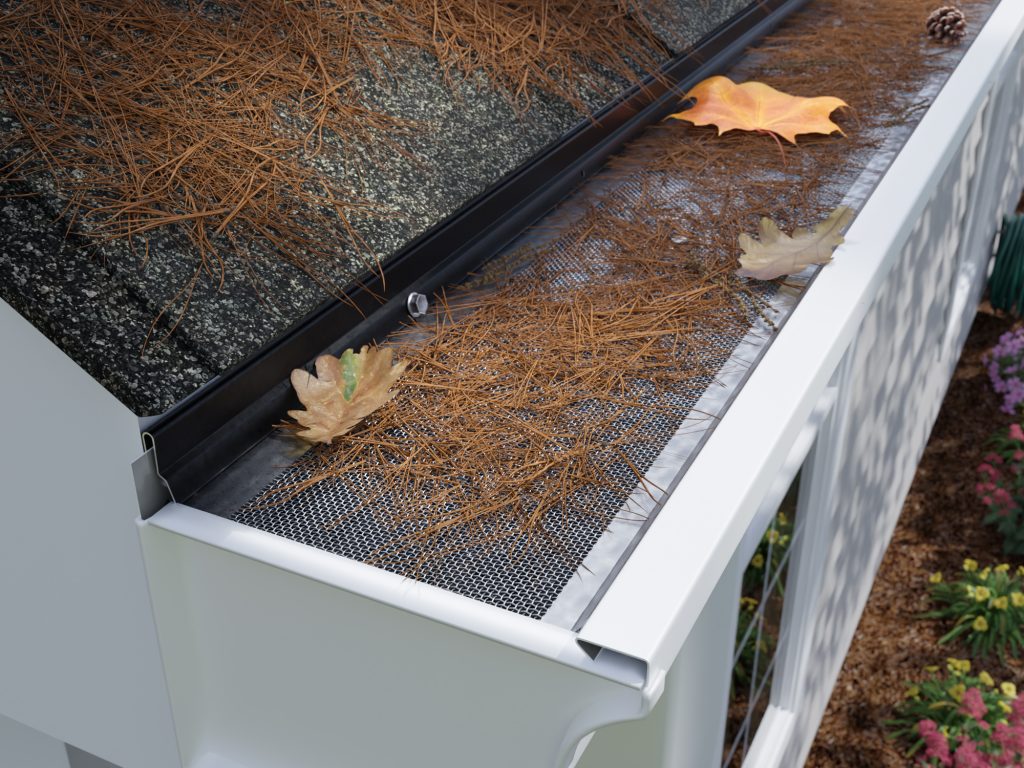
Sasquatch is E-Z Gutter Guard's hangerless gutter protection system. It is a gutter cover, not a gutter and not an installation service. It locks into the gutter's front hem, secures through a patent-pending rear screw ledge, and attaches directly to the fascia.
The goal is to keep leaves and debris out of the trough so water keeps flowing to the downspouts. That supports the EPA's call for gutters free of excessive debris and standing water.
Product details
- 5-inch and 6-inch widths, 7.5-foot lengths, black.
- .019-inch high-strength aluminum standard, or .022-inch heavy-duty Arctic Extreme.
- Fine Debris Filter option where pine needles and oak pollen are common.
- Meets ASTM E2768 and E2886 for flame spread and ember intrusion.
- Lifetime limited transferable warranty.
Plan it with gutter replacement
Sasquatch installs at ground level together with the gutter, before the gutter is fastened to the fascia. For campuses, that makes gutter replacement, roof replacement, and new construction the right time to add it. Bond projects and capital renewal plans that include roofing or gutters are a natural place to include it.
Timing work around the calendar
Campuses have predictable quiet periods. Schools often schedule exterior work over summer and winter breaks. Churches can plan around weekly services and major holidays. Scheduling gutter and gutter protection work for those windows keeps lifts and crews away from students and congregations.
Inspections still matter
Gutter protection reduces debris in the gutter, but it does not remove the need for inspection. Debris can build up on top of covers under heavy canopy, and downspouts, outlets, and underground leaders can still clog. Fold covered gutters into the twice-yearly roof inspections the EPA recommends, and check after major storms.
Where to start
Few campuses can do everything at once. Prioritize:
- Buildings with past leaks, stains, or mold complaints.
- Buildings under the heaviest tree canopy.
- Entrances where overflow drips on students or visitors.
- Gutters already due for replacement.
- Portables and additions that are hard to reach.
Campus checklist
- Inventory gutter footage and widths by building.
- Map tree canopy to decide where the Fine Debris Filter makes sense.
- Note downspouts that do not drain away from buildings.
- Include Sasquatch in upcoming gutter or roof projects.
- Schedule work during breaks.
- Keep twice-yearly inspections, including a fall check.
CCSI supplies Sasquatch to Texas school districts, private schools, churches, and the contractors who serve them. See the CCSI E-Z Gutter Guard line or start on the CCSI homepage.
Frequently asked questions
What does the EPA recommend for school gutters?
The EPA's model school environmental health program says gutters, downspouts, scuppers, and storm drains should be free of excessive debris, gutters and roofs should have no standing water, and downspouts should drain away from the building.
How often should school roofs be inspected?
The EPA model program recommends inspecting roofs at least twice a year, including a pre-winter inspection in October or November.
When should a campus add Sasquatch?
Sasquatch installs at ground level together with the gutter, before the gutter is fastened to the fascia, so it is best planned with gutter replacement, roof replacement, or new construction.
Does gutter protection replace inspections?
No. Debris can collect on top of covers, and downspouts and leaders can still clog. Include covered gutters in regular roof inspections.
Looking for a product or a quote?
Tell us about your project and we'll help you source the right building product.