
Clogged Gutters, Standing Water, and Mosquitoes: Why Texas Commercial Properties Plan Gutter Protection
Most conversations about clogged gutters focus on overflow, fascia rot, and foundation water. There is another reason Texas property managers pay attention: a clogged gutter holds standing water, and standing water is where mosquitoes breed.
For apartment communities, HOAs, schools, office parks, and retail centers, that is more than a nuisance. Residents, tenants, and customers notice mosquitoes, and health departments across Texas list clogged gutters among the breeding sites to eliminate.
What health departments say about gutters
The City of Arlington's mosquito-borne disease prevention page lists clogged rain gutters alongside old tires, flowerpots, and birdbaths as breeding sites, and notes that mosquitoes only need three to four days of stagnant water to reproduce.
The CDC's West Nile virus brochure gives the same advice: mosquitoes lay their eggs in standing water, so routinely empty water from items that collect it, including clogged rain gutters.
Why gutters hold water
A clean, properly pitched gutter drains after a storm. Gutters hold water when:
- Leaves, needles, and seed pods mat in the trough and block flow.
- Debris clogs outlets and downspouts.
- Decomposing debris forms a wet sludge that stays damp for days.
- Sections sag or lose pitch, leaving low spots.
Decomposing organic material in that water is exactly what many common mosquitoes look for when laying eggs.
Texas makes it worse
Texas properties get heavy rain events followed by long warm stretches. In its Texas rainfall frequency update, NOAA reported that 100-year rainfall estimates around Houston increased from 13 inches to 18 inches. Big storms push a lot of debris into gutters at once, and warm weather afterward gives mosquitoes the days they need.
Mature live oaks, pines, and pecans around many Texas communities add a steady supply of leaves, needles, and pollen through much of the year.
Where Sasquatch fits
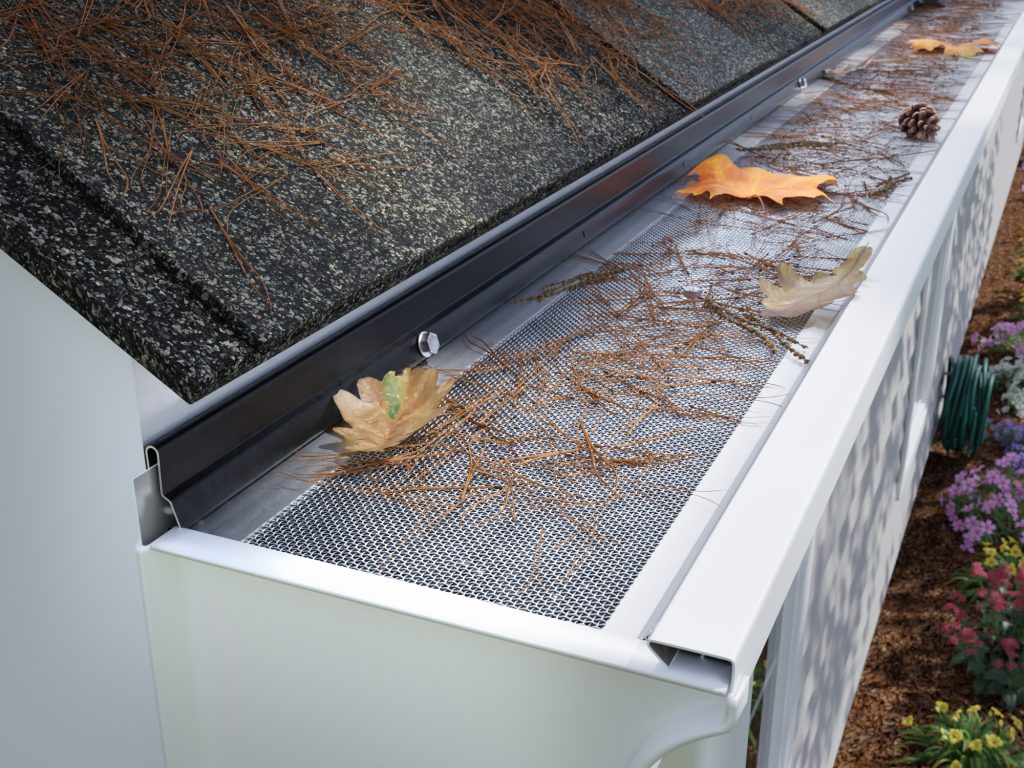
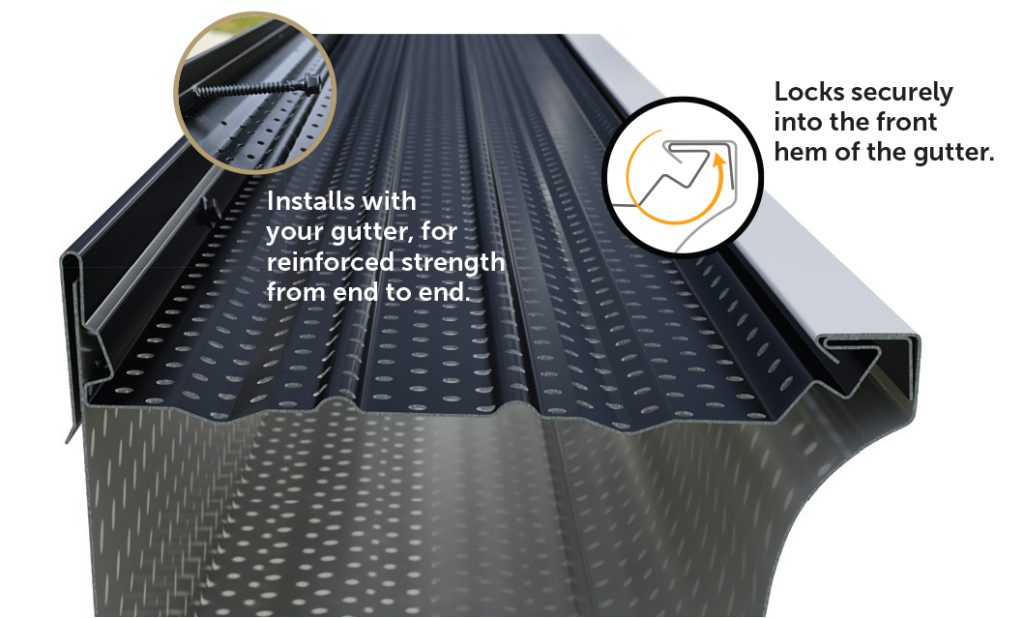
Sasquatch is E-Z Gutter Guard's hangerless gutter protection system. It is a gutter cover, not a gutter and not an installation service. It locks into the gutter's front hem, secures through a patent-pending rear screw ledge, and attaches directly to the fascia.
The goal is simple: keep leaves and debris out of the trough so water keeps moving to the downspouts. Less debris in the gutter means fewer blockages, and fewer places for water to sit.
Product details
- 5-inch and 6-inch widths, 7.5-foot lengths, black.
- .019-inch high-strength aluminum standard, or .022-inch heavy-duty Arctic Extreme.
- Fine Debris Filter option where pine needles and oak pollen are common.
- Meets ASTM E2768 and E2886 for flame spread and ember intrusion.
- Lifetime limited transferable warranty.
Installed with the gutter
Sasquatch installs at ground level together with the gutter, before the gutter is fastened to the fascia. That makes gutter replacement and new construction the natural time to add it. Property managers planning gutter work should include Sasquatch in the same scope.
Where to start on a large property
Few portfolios can redo every building at once. Prioritize the buildings where clogged gutters cause the most trouble:
- Buildings under heavy tree canopy. These clog fastest and hold the most decomposing debris.
- Buildings near pools, courtyards, and playgrounds. Residents and guests spend evenings outside here, when many mosquitoes are active.
- Gutters already due for replacement. Adding protection during replacement avoids a second project later.
- Buildings with repeat complaints. Work orders for overflow or pests point to the gutters that need attention first.
Gutter protection is not mosquito control
Be realistic about what a gutter cover does. Sasquatch helps keep gutters draining. It does not treat mosquitoes, and it does not fix other breeding sites on a property, such as:
- Clogged downspouts and buried drain lines.
- Ponding on flat roofs and around AC units.
- Planters, trash enclosures, and low spots in landscaping.
- Retention ponds and drainage swales.
Covered gutters still need inspection. Debris can build up on top of covers, especially under heavy tree canopy, and outlets and seams should be checked on a schedule.
A property manager's plan
- Walk the property after a heavy rain and note gutters still holding water.
- Check for sagging sections and clogged outlets.
- Map trees over each building to identify where the Fine Debris Filter makes sense.
- Bundle Sasquatch into upcoming gutter replacement or new construction.
- Keep a simple inspection schedule for covered gutters, downspouts, and drains.
CCSI supplies Sasquatch to Texas property managers, HOAs, multifamily owners, and roofing contractors. See the CCSI E-Z Gutter Guard line or start on the CCSI homepage.
Frequently asked questions
Do clogged gutters breed mosquitoes?
Yes. Health departments, including the City of Arlington, and the CDC list clogged rain gutters as places where standing water allows mosquitoes to breed.
Does Sasquatch eliminate mosquitoes?
No. Sasquatch is a gutter protection system that helps keep debris out of gutters so water keeps draining. It is not a mosquito control product, and other standing-water sources on a property still need attention.
When should Sasquatch be installed?
Sasquatch installs at ground level together with the gutter, before the gutter is fastened to the fascia, so it is best planned with gutter replacement or new construction.
Do covered gutters still need maintenance?
Yes. Debris can collect on top of covers, especially under heavy tree canopy, and outlets, seams, and downspouts should be inspected on a regular schedule.
Looking for a product or a quote?
Tell us about your project and we'll help you source the right building product.